Rubber flooring – Playground, Pool Decks
A playground should encourage children to explore. A pool deck should feel comfortable underfoot. A commercial outdoor space should look inviting while standing up to daily use. The surface beneath those activities matters more than most people realize.
At AK Level & Polish Inc., we provide poured-in-place rubber surfacing for playgrounds, childcare centres, schools, municipal properties, condominium amenities, pool surrounds and outdoor recreational areas throughout Toronto, the GTA and Southern Ontario. We approach every project by considering safety, drainage, accessibility, appearance and the condition of the surface below.
One material does not mean one installation method. The correct rubber system depends on where it is installed and what it must accomplish.
What Is Poured-in-Place Rubber Surfacing?
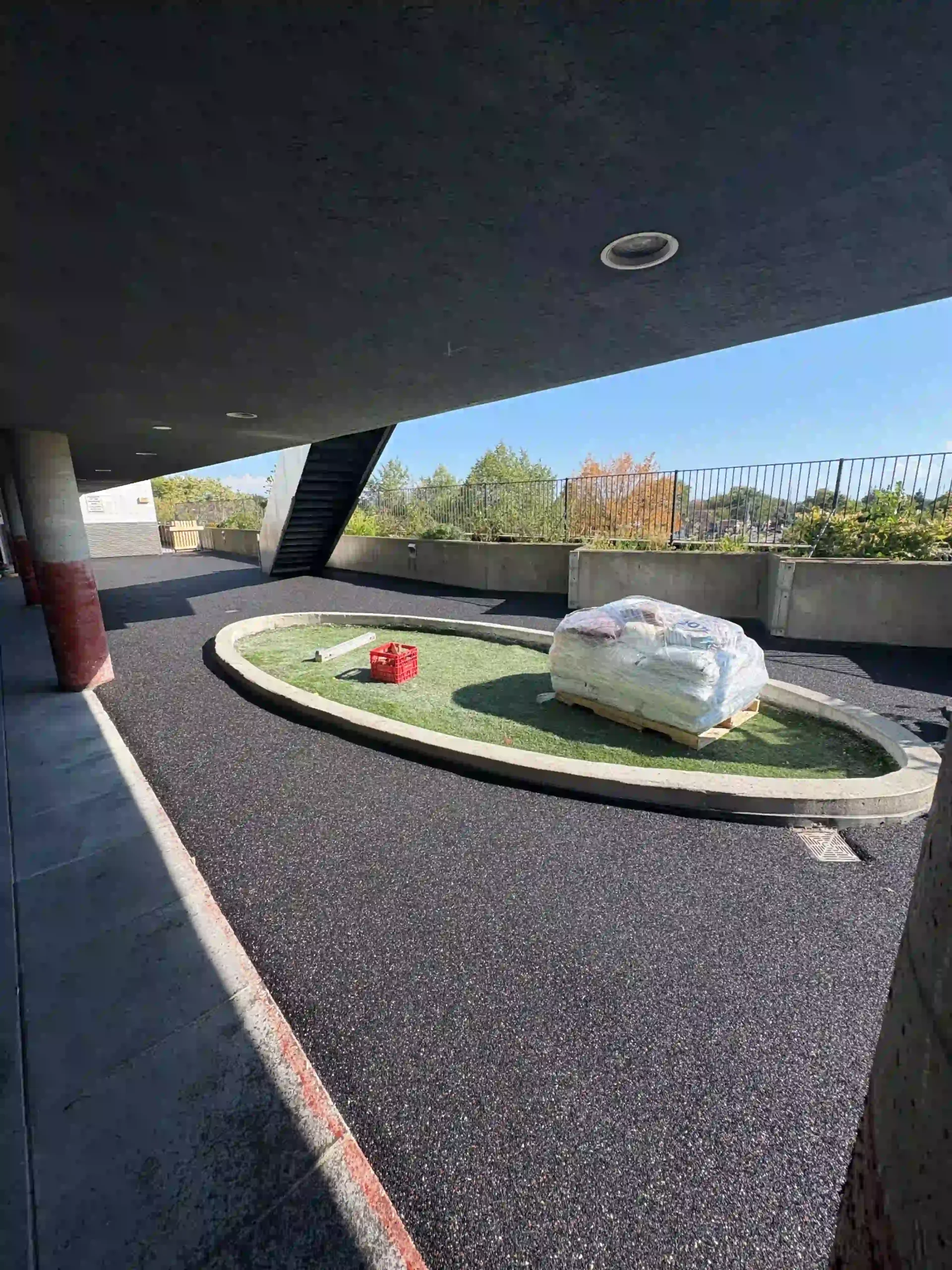
Poured-in-place rubber is a seamless surface made from rubber granules mixed with a compatible binder and installed directly at the project site. It can follow curves, surround equipment, create colour patterns and accommodate irregular layouts without relying on individual tiles.
Playground systems commonly use two layers: a resilient recycled-rubber base, often called SBR, beneath a coloured EPDM wear layer. The cushioning layer is selected to achieve the specified impact performance, while the upper layer provides the visible finish and takes everyday traffic.
Pool decks, patios and walkways typically use a different assembly focused on texture, comfort, durability and wet-area performance.
A decorative rubber deck is not automatically an impact-rated playground surface.
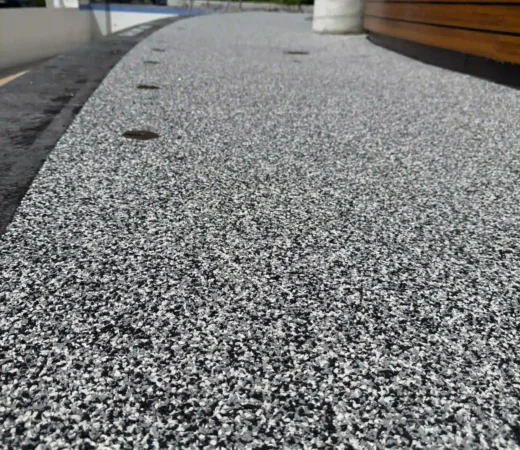
Playground & Childcare Safety Surfacing
For playgrounds, the most important decision is not the colour. It is the relationship between the equipment’s fall height and the rubber system installed beneath it.
An appropriate playground design considers the required use zones, critical fall height, surface thickness and tested impact attenuation. In Canada, children’s playground projects commonly reference CSA Z614; ASTM F1292 addresses impact attenuation. Where accessibility is specified, relevant requirements and testing, including ASTM F1951, should also be considered.
We review the intended equipment and project specifications so the proposed system can be matched to the required performance. Compliance depends on the complete tested assembly, correct installation and any required verification; rubber alone does not eliminate injury risk.
Our playground applications include daycare yards, school playgrounds, municipal parks, condominium play areas and private backyard play spaces. Colourful paths, shapes, learning games and contrasting zones can add character without losing sight of safety and function.
Pool Decks, Splash Areas & Outdoor Living
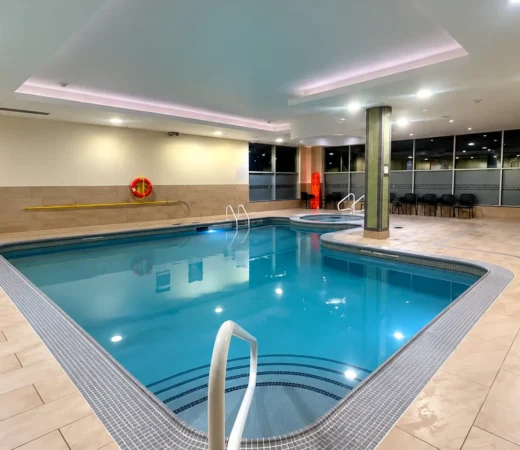
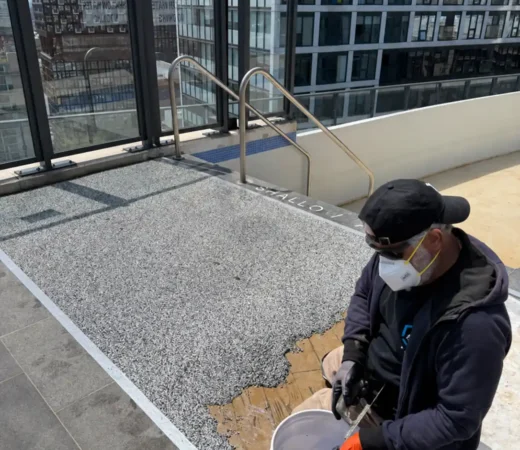
Around pools, people move between wet and dry surfaces, often barefoot. Rubber surfacing can provide a textured, more forgiving alternative to hard concrete, with a clean appearance that works around curved coping, steps and landscaping. Suitable systems can be used on residential pool decks, condominium pool surrounds, selected splash areas, patios, walking paths and recreational courtyards. We consider wet traction, drainage, water exposure, cleaning chemicals, sunlight and surface temperature before recommending a product. Rubber is not slip-proof, and dark surfaces can become hot in direct sunlight. Surface selection and maintenance matter. Permeable rubber also does not replace a waterproofing membrane or solve an underlying drainage problem.
Design Freedom Without Compromising Performance
Rubber surfacing does not need to look institutional. Clients can choose understated greys and earth tones, bright playground colours, contrasting borders, blended granules or custom patterns, depending on the selected system. For designers and property managers, the result can be both functional and visually coordinated with surrounding architecture. We consider transitions, edge details, accessible routes, drains and adjoining materials so the finished surface feels intentional rather than added as an afterthought.
Why the Base Preparation Matters
Before installation, we evaluate elevations, drainage, surface stability, damaged areas, edge restraints and any existing rubber requiring removal. Some projects need excavation, grading, drainage improvements or concrete repairs before new rubber can be installed.
Water must have an appropriate route away from the surface and supporting layers. Poor drainage, unstable bases or weak edges can undermine an otherwise good installation.
Our Installation Approach
Once the appropriate system and scope are established, work may include removing existing materials, preparing and grading the base, treating edges, mixing the rubber and binder, and hand-trowelling the surface to the specified profile. Installation conditions, mixing ratios and curing are controlled according to the product manufacturer's instructions.
We also plan around site access, weather, neighbouring finishes and reopening requirements, particularly for schools, childcare centres and occupied properties.
Repairs, Maintenance & Long-Term Value
Depending on its condition, an existing surface may be suitable for localized repairs or a compatible resurfacing layer rather than complete removal. We assess the underlying base and existing bond before recommending an approach.


 Why AK Level and Polish Inc.
Why AK Level & Polish?
Our background in concrete preparation, floor repairs, resurfacing and specialty flooring gives us an important advantage: we look beyond the finished colour. We pay attention to the base, bonding, elevations, drainage, transitions and suitability of the specified materials.
We work with general contractors, property managers, schools, childcare operators, municipalities and homeowners to develop practical scopes that respect budgets and construction schedules.
Send AK Level & Polish your site details, approximate area and intended use. We’ll help identify the questions that matter and provide a clear proposal for the appropriate system
Planning a playground, pool deck or outdoor rubber surface?